A Pokémon booster box swap is the simplest card trade there is. The box is still in its shrink wrap, everybody knows what is inside it in general and nobody knows in particular, and both of you can see from the name alone what is being offered. List it unopened, say what you would take for it, and wait for somebody who wants your box as much as you want what they have.
This post is about why sealed product suits a swap so well, and about the single card sitting beside it on the shelf, which suits it much less.
Why a sealed box is the easy case
Every listing here sits in a band, a position on one scale that runs across every category on the site. To place something on that scale the model needs evidence: a price feed, a known shop price and its age, or the record of swaps that have already happened. A sealed Elite Trainer Box arrives with the second of those built in. It was on a shelf, it had a sticker, and you can say what that was.
When you list it, the form asks for the price when new, how old it is, and optionally a link to where you saw that price. The model ages that figure on the curve for toys and games and blends it with anything else it knows. The figure itself never appears anywhere on the site. What the other person sees is a band.
That is also why the box has to stay sealed. An opened Destined Rivals booster box is a few loose packs and a lot of empty cardboard, and there is no shelf price for that. The wrap is what makes the thing describable.
What the band will look like at first
Wide. When the seller's own word is the only evidence, confidence is capped deliberately low and the range shown spans three bands. The item page says plainly that the price is seller-stated and names who stated it, so nobody mistakes it for something we checked.
It narrows as other owners list the same thing. Once three different people state a price for the same product and those prices agree closely, the agreed figure is promoted to the product itself rather than living on one listing. From then on every box of that kind starts from shared evidence, and one optimistic seller can no longer pull it around.
The sealed products worth listing first
Searches for Pokémon sealed product cluster on a few shapes. These are the ones people go looking for by name, which is a fair proxy for what somebody on the other side of a swap is hoping to find.
| Product | What it is | Worth saying in the listing |
|---|---|---|
| Booster box | A display of sealed packs from one set | The set name, the language, and that the outer wrap is intact |
| Elite Trainer Box | Packs plus sleeves, dice and a storage box | Set name, and whether the box has dents or a split wrap |
| Booster bundle | A smaller run of packs, often six | Set name and the pack count printed on it |
| Premium or Ultra Premium Collection | A boxed set built around one card or Pokémon | The full product name, because there are several per year |
| Illustration or special collection | A boxed set of promos and packs | Series number, since the series look alike |
Recent sets get the most attention. Prismatic Evolutions, Destined Rivals, White Flare, Ascended Heroes and Phantasmal Flames all draw steady searches for their boxes. Older sealed product draws fewer searches and more serious ones, and a 151 Elite Trainer Box is still one of the most recognisable things in the hobby.
What a sealed box could come back as
The obvious trade is box for box: you have opened enough Scarlet and Violet to last a lifetime and want something from the Mega Evolution era instead. Somebody else is going the other way. That is the shape the matcher looks for, and it only suggests a pair when each of you wants what the other listed.
The less obvious trade is out of the hobby altogether. A band is a position on one scale for the whole site, so a sealed box can share a band with a set of headphones, a cordless drill, a board game collection or a decent pair of walking boots. If the box was bought to rip and never got ripped, the honest question is which idle thing in somebody else's house you would actually use. You can see roughly where yours sits, with no account, in the swap checker.
When two sides almost balance, one of you adds a second, smaller item. A sleeve of packs. A tin. A binder. That extra is called a sweetener, and it is the only way a gap ever closes here. Money is never an option and there is no balance or credit anywhere on the site.
Where the chase card fits
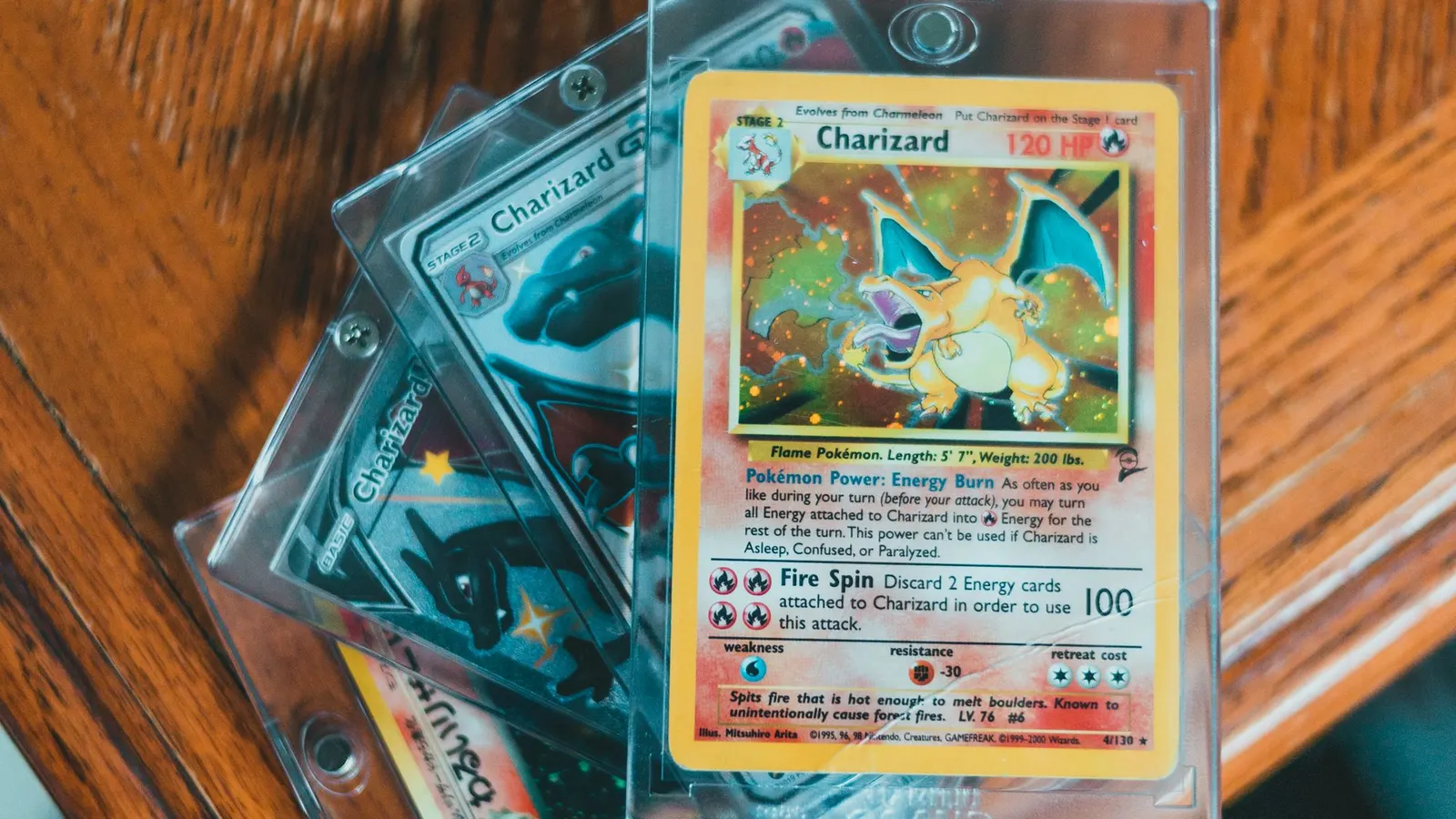
The single most searched card in the UK this year is the Charizard ex from 151, with Mega Charizard X ex, Mega Darkrai ex, Team Rocket's Mewtwo ex and Umbreon ex close behind. It is natural to want to swap one of those, and it works differently from a box.
A loose card has no price when new. It came out of a pack, and the pack had the price. For the cards people search for most, we have researched what a raw, near-mint copy sells for from public sold listings, and that research gives the card a band. The item page labels it as a researched market price, never as a live feed, and the band starts wider than a feed would give, because it was read once rather than tracked.
Name the card exactly, with its set, so it joins the right record: "Charizard ex 151" is a different card from "Charizard". A card we hold no research for lists as Not yet valued. It stays visible on browse, but the matcher leaves it out until there is evidence, because a trade suggested against a number we do not have would be a guess dressed up as an answer. Research also goes stale on purpose: an unrefreshed price fades out over the following year rather than coasting.
Handing over a sealed box safely
Look at the wrap before you confirm. Resealed product is the oldest trick in the hobby. Factory wrap on a booster box has neat folds and often a logo printed through it; a hand-shrunk box has bunched corners and a seam in the wrong place. A swap only completes when both of you confirm you received what you expected, so do not confirm until you have looked.
We inspect nothing. A listing is a photo and a title, and we check neither against the box. The safeguard is the confirmation step and the record that sits on every profile.
The clock is shared. Once both sides accept, a 48-hour window opens to post or hand over, and either of you can pull out before it completes. Pulling out releases both sides at once and is recorded where the other person can see it.
Every trade is between two people. Your box to one collector, their deck to a second, the second back to you: that is refused in code, and it is a deliberate limit. If you know math trades from other hobbies, this page on how a two-party matcher differs is worth a minute.
The short version
Keep it sealed, name the set exactly, state its price when new, and say broadly what you would take back. The box is the part of the collection the model can place, and the part a stranger can say yes to without a single photo of a card. The guide to trading Pokémon cards covers the rest of the folder.